

Silk Abaya vs Chiffon Abaya: Which Fabric Should You Choose?
Choosing between a silk abaya and a chiffon abaya can feel overwhelming — both fabrics drape beautifully, both are widely loved across the UAE, and both come in stunning cuts. But they're not interchangeable. The right choice depends on your occasion, your budget, and how you want to feel when you walk into a room. This guide breaks it down clearly so you can decide with confidence.
What Is a Silk Abaya?
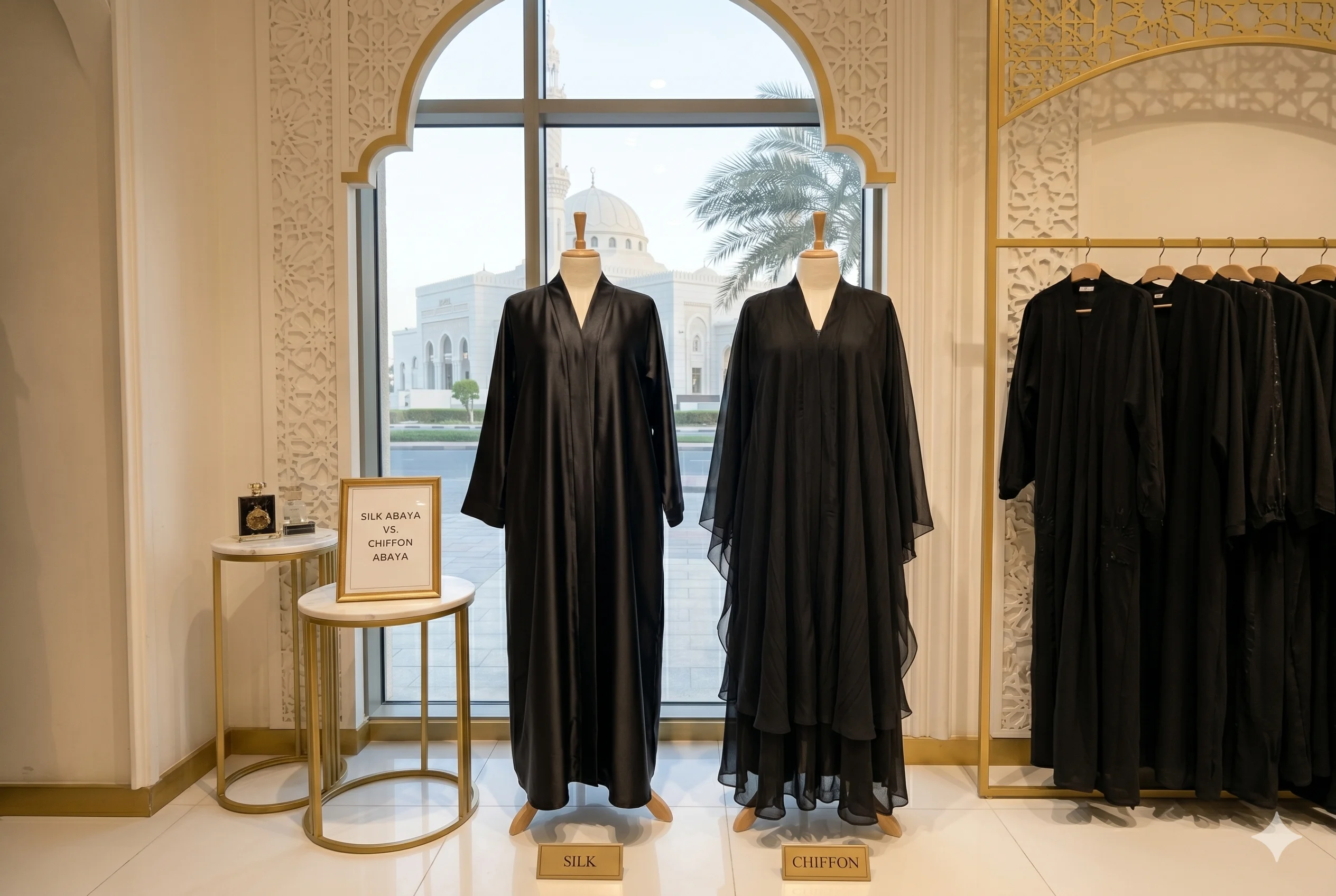
A silk abaya is crafted from natural silk fibres — the same material that has defined luxury dressing in the Gulf for generations. Silk has a distinctive lustrous sheen that catches light naturally, and its drape is fluid and weighted without feeling heavy on the body.
The texture is smooth against skin — almost cool to the touch — which makes it ideal for indoor occasions where you want to look polished. Think formal dinners, weddings, Eid gatherings. In Dubai and across the UAE, silk is associated with occasion dressing: it reads as elevated and intentional.
Price-wise, genuine silk sits in the mid-to-luxury range. That's a fair reflection of the material and the craftsmanship it demands.
What Is a Chiffon Abaya?
Chiffon is a sheer, lightweight woven fabric — most commonly polyester or a silk blend — that creates a floaty, layered silhouette when worn. A chiffon abaya moves beautifully as you walk, with that soft, ethereal quality that has become iconic in Gulf modest fashion.
Because chiffon is breathable and light, it works across a wider range of occasions than silk. You can wear it to work, a casual lunch, a mall afternoon, or a celebration without looking over- or under-dressed. In the UAE's warm climate, that lightness is a real advantage — it doesn't trap heat the way heavier fabrics do.
Polyester chiffon is also significantly more affordable than silk, and it holds its shape well over time with minimal fuss.
Silk vs Chiffon — Side-by-Side Comparison
Here's a direct comparison to help you decide at a glance:
| FeatureSilk AbayaChiffon Abaya | ||
| Texture | Smooth, lustrous, cool to touch | Sheer, soft, lightly textured |
| Drape | Weighted and fluid | Floaty and airy |
| Best occasions | Formal events, weddings, Eid | Everyday, work, casual to semi-formal |
| UAE climate | Best indoors or evenings | Great year-round, including outdoors |
| Price | Higher — natural material | More accessible — polyester or blend |
| Care | Dry clean or delicate hand wash | Delicate machine wash, quick-dry |
Both fabrics are available in open abaya silhouettes, kimono cuts, and traditional closed styles. The fabric affects the feel and the occasion — not the design you love.
Which Is Right for You?
If you're dressing for a special occasion — a UAE wedding, an Eid gathering, a formal dinner in Dubai — a silk abaya is worth the investment. The way silk moves and reflects light is hard to replicate. For moments that deserve that level of attention, it delivers.
If you want something you'll reach for regularly — the abaya that carries you from the morning school run to an afternoon meeting to a relaxed dinner out — chiffon is your fabric. Easy to wear, easy to maintain, and versatile enough to handle the full range of Gulf daily life.
Many women keep one of each. A chiffon piece for everyday rotation and a silk abaya reserved for occasions. That's probably the most practical approach, especially when you're navigating the varied dress codes that come with life in the UAE.
If you want to explore other fabric options, our linen abaya guide is worth a read — linen offers a completely different texture and is a standout choice for casual daywear in the Gulf heat.
For occasion and luxury pieces, the Arab Luxury collection features premium fabrics including silk-blend and elevated chiffon in statement cuts.
How SHAZ Approaches Fabric Selection
SHAZ is Dubai's handcrafted kimono abaya brand — the Middle East's first kimono-focused upperwear label, designed specifically for Gulf women and their lifestyle.
Every fabric in the SHAZ collection is selected with drape, durability, and the UAE climate in mind. Chiffon pieces are tested for weight and movement before reaching production. Silk-blend fabrics are chosen for longevity, because a piece you love should last more than a season.
SHAZ's open abaya and kimono silhouettes work particularly well in both fabrics. To explore the full range of open styles, cuts, and fabric options, the open abaya guide covers everything you need to know before buying.
Frequently Asked Questions
Is a silk abaya suitable for summer in the UAE?
Silk is a natural fibre and does breathe, but it's heavier than chiffon and better suited to indoor occasions or cooler evenings. For outdoor wear in UAE summer heat, lightweight chiffon or linen will keep you far more comfortable. Save your silk pieces for air-conditioned settings where you can appreciate the fabric's feel and appearance without overheating.
Can a chiffon abaya look as formal as a silk one?
Yes — formality comes from cut, finish, and accessories as much as fabric. A well-tailored chiffon abaya in a deep colour with clean seams and minimal embellishment can hold its own at formal events. The key is quality construction. Thin, poorly finished chiffon reads as casual; well-made chiffon in a considered design looks polished and intentional.
Which fabric is easier to care for as a daily abaya?
Chiffon is significantly easier to maintain day-to-day. Polyester chiffon handles a delicate machine wash cycle, dries quickly, and holds its shape well. Silk requires more care — hand-washing or dry cleaning, careful storage away from direct light, and gentle ironing on low heat. For a chiffon abaya you plan to wear several times a week, the lower maintenance alone makes it the practical choice.
Explore SHAZ's handcrafted abayas in premium fabrics — each piece made to last. View the Collection →